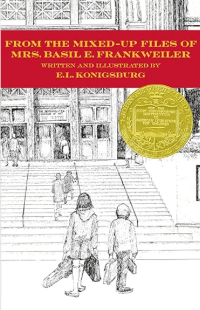
For the first episode of our fourth (!) season, we reread E.L. Konigsburg’s Newbery Medal winner From The Mixed-Up Files of Mrs. Basil E. Frankweiler, which was published in 1967. This book, one of our all-time favorites, has one of the best plot premises of all time: a suburban brother and sister run away from home and camp out at the Metropolitan Museum of Art in New York.
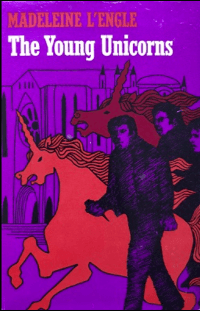
For this episode, we reread Madeleine L’Engle’s 1968 novel The Young Unicorns, the third book in the Austin family series. We discussed 1960s New York, racial representation, family musical evenings, and how absolutely bonkers this book is.
Blog posts on The Young Unicorns on Pickle Me This (this is the one where the writer thinks L’Engle wrote Dave as a Black character) and Lady Fancifull
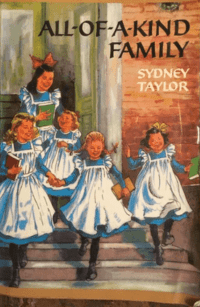
On this episode, we discuss All-of-a-Kind Family, Sydney Taylor’s 1951 classic about five sisters growing up on New York’s Lower East Side. Over the course of a year, the girls experience joys (like celebrating Jewish holidays and the Fourth of July) and sorrows (like getting scarlet fever and even worse losing a library book), and spend a lot of time thinking about how to spend their allowance (one penny).
(We’ve been publishing episodes regularly but have gotten behind on the website, so we’re catching up. This episode was published on October 31. You can listen to it here.)
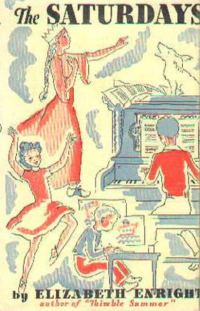
On this episode, we reread Elizabeth Enright’s 1941 novel The Saturdays, about four children who pool their allowances and set out on adventures in New York.
Mary Grace’s blog post on children’s books from 1919, on which she talks about an illustrated edition of Hans Brinker and the Silver Skates with illustrations by Elizabeth Enright’s mother, Maginel Wright Enright.
The podcast is hosted by Buzzsprout at rereadingourchildhood.buzzsprout.com and is available on Spotify, Apple Podcasts, and other podcast platforms. You can listen to it on Buzzsprout here.
(We’ve been publishing episodes regularly but have gotten behind on the website, so we’re playing catch-up. This episode was published on October 3. You can listen to it here,)
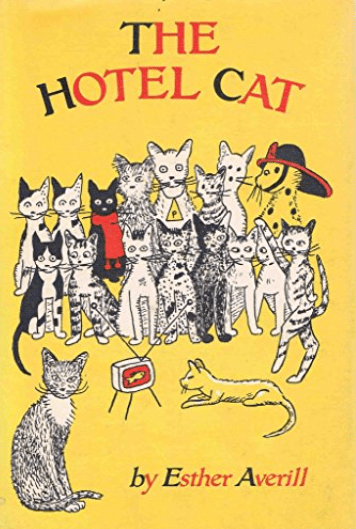
On this episode, Deborah (a cat person) rereads, and Mary Grace (not a cat person) reads, The Hotel Cat(1969), a late entry in Esther Averill’s long Cat Club series. You can listen to this episode here.
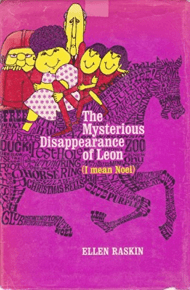
Mary Grace and Deborah discuss Ellen Raskin’s 1971 mystery romp, The Mysterious Disappearance of Leon (I Mean Noel), about a woman’s decades-long search for her husband, whom she married as a child. (It’s a long story.) The book is full of word games, puzzles, and creative illustrations by Raskin, who was also a graphic artist.
Other books by Ellen Raskin:
Nothing Ever Happens on My Block(1967). This picture book, a childhood favorite of Mary Grace’s, was the first book Raskin wrote after illustrating many children’s books written by others.
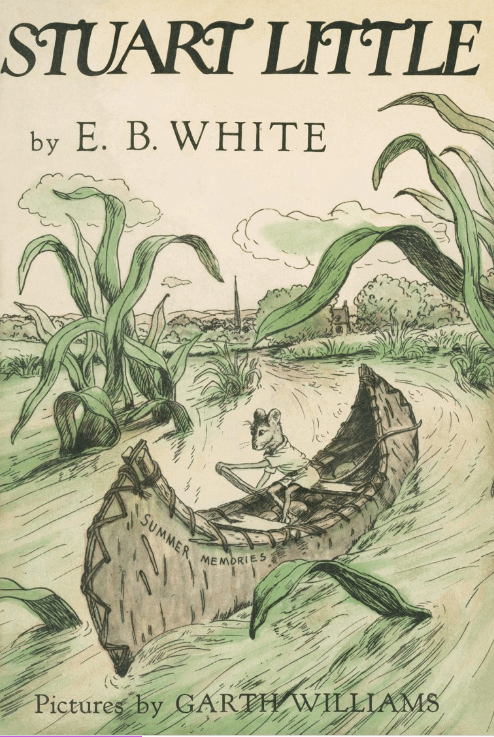
On this episode, Deborah and Mary Grace reread Stuart Little, E.B. White’s 1945 classic about the adventures of a New York boy who looks exactly like a mouse. They discuss their early memories of reading Stuart Little (or having it read to them), Garth Williams’ wonderful illustrations, and pioneering children’s librarian Annie Carroll Moore’s vehement opposition to the book.
The Rabbits’ Wedding, the children’s book by Stuart Little editor Garth Williams that was banned from Alabama libraries because a black and a white rabbit get married
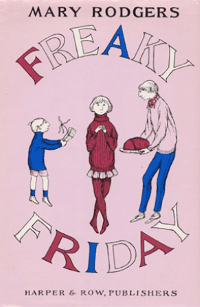
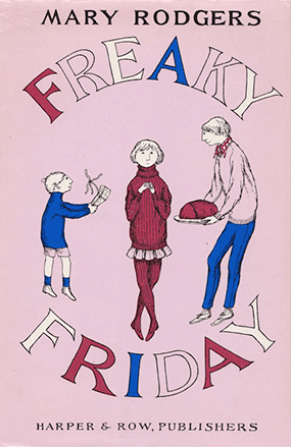
In this episode, Mary Grace and Deborah reread one of their childhood favorites, Mary Rodgers’ 1972 mother-daughter body-switching story Freaky Friday. They also discuss Rodger’s posthumous 2022 memoir Shy, which was a New York Times Notable Book.
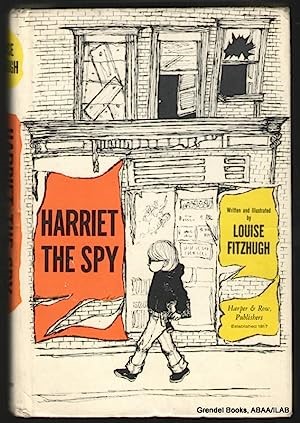
Mary Grace and Deborah discuss Harriet the Spy, Louise Fitzhugh’s 1964 classic about an 11-year-old would-be writer, her spying career, and her interactions with her nanny, her classmates, and her parents. You can listen to the episode here.
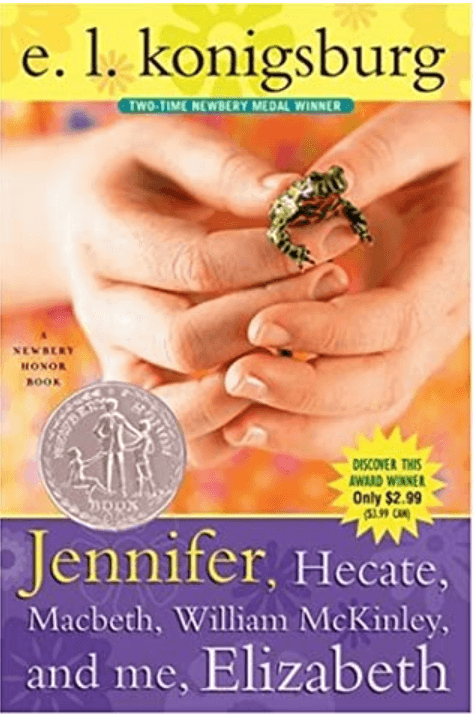
Jennifer, Hecate… is narrated by Elizabeth, a fifth grader who has just moved to a suburb of New York. She has no friends until she meets Jennifer, who says she’s a witch and offers to train Elizabeth as her apprentice. A series of challenges ensues (one week, for example, Jennifer has to eat a raw onion every day), and Elizabeth also faces the more common challenges of dealing with her teachers and classmates. In this episode, Debby and Mary Grace discuss witchcraft, race, childhood friendships, and the pronunciation of “Hecate.”
Konigsburg’s second novel, From the Mixed-Up Files of Mrs. Basil E. Frankweiler, was also published in 1967. It won the Newbery award in 1968, and Jennifer Hecate… was a runner-up. She is the only writer ever to have won both honors in the same year.
Debby and Mary Grace mentioned these other books by E.L. Konigsburg:
(George), about a boy in Florida who thinks that a little man named George lives in his head.
A Proud Taste for Scarlet and Miniver, the life of medieval queen Eleanor of Aquitaine as narrated by people close to Eleanor as they wait for her to join them in heaven.
Kongisburg and her family were living in the suburban town of Port Chester, New York, when she write Jennifer, Hecate. The town Jennifer and Elizabeth live in is based on Port Chester. As Mary Grace mentioned, Konigsburg’s children faced harassment because they were Jewish. Laurie Konigsburg Todd, discusses this in an interview in a Smithsonian Magazine article commemorating the fiftieth anniversary of From the Mixed-Up Files.
Here are some covers of various editions of Jennifer, Hecate:
This is the 50th anniversary edition, which replicates the first edition cover.
This is the cover of the paperback edition Debby and Mary Grace read as children (they both still have their copies), featuring Jennifer, Elizabeth, and their toad, Hillary Ezra.
This is the cover of a recent paperback edition, which, as Mary Grace mentioned, has been criticized for “erasing” Jennifer, who is African-American.
Here’s a Puffin edition with the abridged British title.
Mary Grace mentioned that a well-known British author criticized E.L. Konigsburg’s long titles. The author, John Rowe Townsend, is quoted in this article as calling the titles “gimmicky” and “an irritation” .
Here are the books that Debby and Mary Grace recommended for fans of Jennifer Hecate:
The Egypt Game, by Zilpha Keatley Snyder, about a group of children in Berkeley, California, who perform ancient Egyptian rituals. Is it just a game, or something more?
Harriet the Spy, by Louise Fitzhugh, the classic story of Manhattan girl who spies on her neighbors and records her observations about them, and about her classmates, in her journal.
And, lastly, here’s Merriam-Webster’s definition of Hecate, with pronunciations. Bottom line: Debby and Mary Grace are both right!





 Rereading Our Childhood