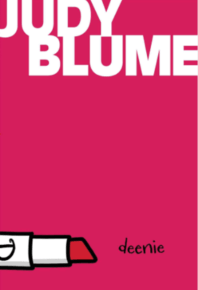
Writer Alex Poppe joins us to talk about Deenie, Judy Blume’s 1973 novel about a girl, pigeonholed as the pretty one in her family, whose life is thrown off track when she’s diagnosed with scoliosis. Alex is the author most recently of the memoir Breakfast Wine.
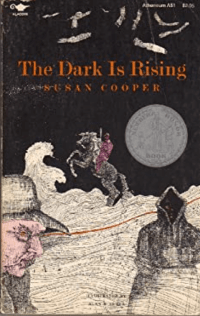
In this episode, we read Susan Cooper’s 1973 novel The Dark is Rising, which was a Newbery Honor Book. It’s the story of Will, a British boy who discovers on his eleventh birthday that he’s the last of the Old Ones, destined to fight against the forces of the Dark. It takes place over the period from the winter solstice to the twelfth day of Christmas, so it’s a great holiday season read. (If the whole “magical British boy/eleventh birthday” thing sounds familiar, Cooper is widely considered to have influenced J.K. Rowling.)
(We made it through our backlog! There’s another episode coming on Thursday, December 12. You can listen to this episode here.)
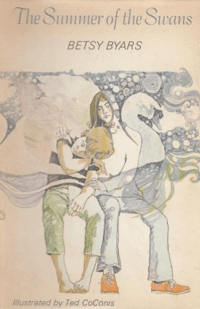
On this episode, we reread Betsy Byars’ The Summer of the Swans, which won the 1971 Newbery Medal. It’s an evocative story of a 14-year-old girl who’s preoccupied with her big feet and her puce sneakers until the disappearance of her younger brother, who has an intellectual disability, forces her to look beyond her own adolescent thoughts.
Another 1970 book about an adolescent girl’s search for identity that, in Mary Grace’s opinion, should have won the Newbery: Are You There God? It’s Me, Margaret?.
Two post-Sumer of the Swans movies whose titles make startling appearances in the book: Bull Durhamand Thelma and Louise.
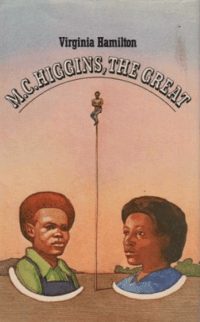
On this episode, Mary Grace and Deborah read Virginia Hamilton’s 1974 novel M.C. Higgins the Great, about a teenaged boy in Appalachia whose life is turned upside down when two strangers come to town. Hamilton won the Newbery Medal for the book; she was the first African American to win the award.
Recommended for fans of M.C. Higgins, the Great: other books by Virginia Hamilton (Deborah), Where the Lilies Bloomby Vera and Bill Cleary (Mary Grace)
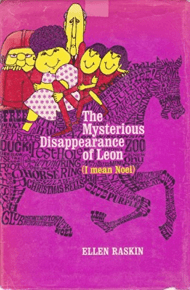
Mary Grace and Deborah discuss Ellen Raskin’s 1971 mystery romp, The Mysterious Disappearance of Leon (I Mean Noel), about a woman’s decades-long search for her husband, whom she married as a child. (It’s a long story.) The book is full of word games, puzzles, and creative illustrations by Raskin, who was also a graphic artist.
Other books by Ellen Raskin:
Nothing Ever Happens on My Block(1967). This picture book, a childhood favorite of Mary Grace’s, was the first book Raskin wrote after illustrating many children’s books written by others.
Mary Grace and Deborah ring in 2024 with a special episode where they count down their five favorite books from 50 years ago, defined as published between 1972 and 1974. They (mostly) didn’t reread these books for the episode, so their choices are based on their childhood memories.
As Mary Grace mentions, the format was inspired by the Book Riot podcast, which has done a number of similar countdowns, including a fun episode on the top bookish phenomena of the past 25 years.
Here are Deborah’s and Mary Grace’s favorites–but we suggest that you listen to the episode before looking at the list!
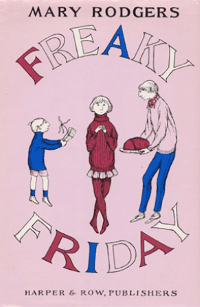
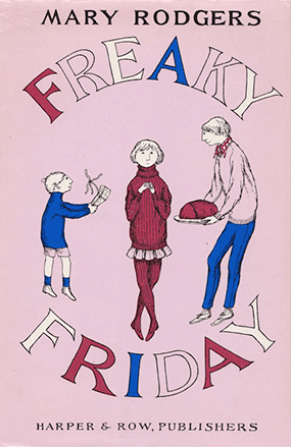
In this episode, Mary Grace and Deborah reread one of their childhood favorites, Mary Rodgers’ 1972 mother-daughter body-switching story Freaky Friday. They also discuss Rodger’s posthumous 2022 memoir Shy, which was a New York Times Notable Book.
In the first episode of Rereading Our Childhood, Mary Grace and Deborah revisit Are You There God? It’s Me, Margaret, Judy Blume’s classic 1970 novel about adolescence. You can listen to this episode here.
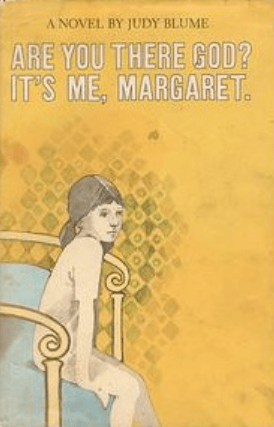
Are You There God? It’s Me, Margaret is narrated by Margaret, a sixth-grader who has just moved from New Jersey to New York. Margaret’s father is Jewish and her mother was brought up Christian and she is being raised without a religion, which leaves her wondering where she fits in. Meanwhile, she and her friends are preoccupied with bras and boys and are eagerly waiting to get their periods. In this episode, Mary Grace and Deborah discuss the impact of Are You There God? It’s Me, Margaret and Blume’s other books on their own adolescent selves and how the book held up on rereading. They also talk about the Judy Blume moment currently underway, with a feature film of Are You There God? It’s Me, Margaret and the Amazon Prime documentaryJudy Blume Foreverrecently released, and about Blume’s activism against book banning.
As Mary Grace and Deborah discuss, different covers over the years have presented Margaret in different ways, from the pensive girl sitting on her bed on the original edition,
to the blond Margaret on the 1970s paperback edition, who looks nothing like the Margaret in the book,
to the current paperback edition, where Margaret is anachronistically texting God on a cellphone (and he seems to be writing back),
to the movie tie-in with Margaret adjusting her shoe, presumably from the scene where she gets blisters walking to school without socks after her awful friend Nancy tells her that no one in sixth grade wears them.
Forever, the much-banned book about a teenage sexual relationship
As Mary Grace and Deborah discuss, Judy Blume’s books are often banned. An April 2023 PEN America report includes Blume’s novel Forever… on a list of books that have recently been removed from school libraries in the United States.
Here’s the New York Times article Mary Grace mentioned about the Judy Blume book-to-screen moment currently underway. (Clarification: It’s from the business section.)
As Mary Grace notes, Judy Blume demonstrated the famous “I must, I must, I must increase my bust” exercise on a TV program (HuffPost Live).
Recommended for fans of Are You There God? It’s Me, Margaret:
Freaky Fridayby Mary Rodgers, the hilarious story of a New York teenager who wakes up and discovers she’s been turned into her mother
The Long Secret by Louise Fitzhugh, the sequel to Harriet the Spy and one of the few books from the era other than Are You There God? It’s Me, Margaret to feature a girl getting her first period
If you haven’t had enough discussion of Margaret’s adolescent travails, there’s a great segment on the book on First Edition, a new podcast from the always interesting Book Riot team. They also have a substack critiquing the book’s covers.




 Rereading Our Childhood