Author Archives: rereadingourchildhood

Rereading Half Magic by Edward Eager

You can listen to this episode here.

In this episode, Mary Grace and Deborah discuss Edward Eager’s Half Magic, the first of Eager’s seven books of magical adventures. Four bored siblings living in a Midwestern city in the 1920s find a magic amulet…except it only grants half of what you wish for. We talk about what has and hasn’t held up in the seven decades since Half Magic was published, about Eager’s life, and about the obscure jokes Eager threw in to entertain himself.

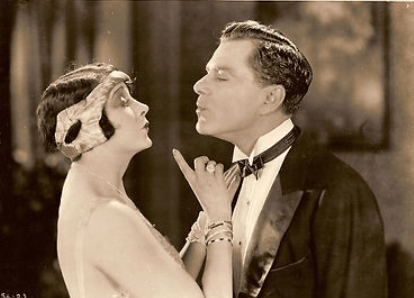
The Half Magic children go to see Sandra, a 1924 silent movie (now lost) starring Barbara La Marr. As Mary Grace discusses on the podcast, this movie is not at all appropriate for children. Here’s a still, and you can read the review from Moving Picture World, which didn’t like the move any more than the children did, here.

Barbara La Marr and Bert Lytell in “Sandra”

As Mary Grace mentions, Edward Eager had a career in show business as well as being a children’s writer. You can listen to this YouTube recording of Peggy Lee singing “Good-Bye, John,” lyrics by Eager, and decide whether you agree with her that he was more talented as a writer than as a lyricist.

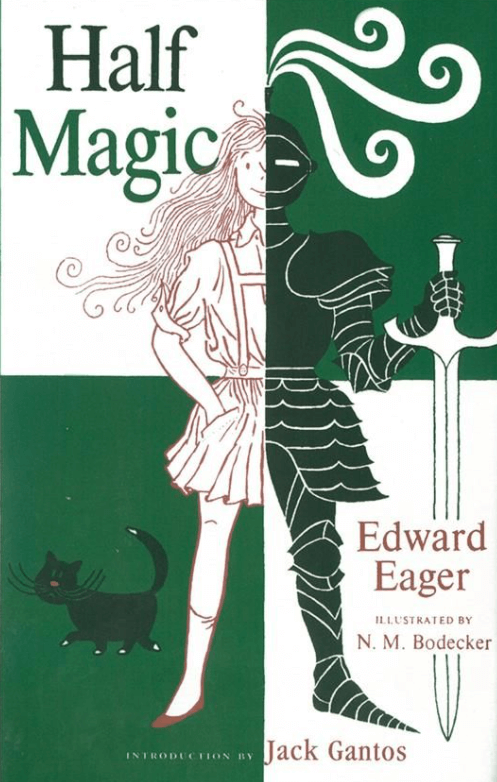
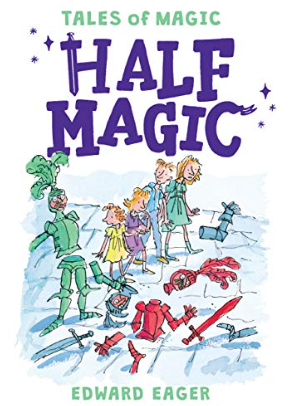
The original cover of Half Magic appears at the top of the post. Mary Grace and Debby were a bit alarmed by the illustration chosen for the current paperback edition (not by original illustrator N.M. Bodecker), which features two knights who have been chopped into pieces. (Don’t worry, they don’t remain in this state for long.)

Here are links to other books Debby and Mary Grace recommend for fans of Half Magic.

Recommended by Mary Grace (not just because Debby wrote them! They’re wonderful books!):
George Washington and the Magic Hat, by Deborah Kalb
John Adams and the Magic Bobblehead, by Deborah Kalb
Thomas Jefferson and the Return of the Magic Hat, by Deborah Kalb

Recommended by Debby:***
The Time Garden, by Edward Eager
Time Cat: The Remarkable Journeys of Jason and Gareth, by Lloyd Alexander
Tom’s Midnight Garden, by Philippa Pearce
A Traveller in Time, by Alison Uttley
A Wrinkle in Time, by Madeleine L’Engle

Debby’s post on these books appeared on the website shepherd.com.

You can find Debby’s author interviews on her blog Books Q&A by Deborah Kalb and Mary Grace’s adventures in the 1920s on her blog, My Life 100 Years Ago.

This episode was edited by Adam Linder of Bespoken Podcasting.

Rereading Caddie Woodlawn by Carol Ryrie Brink

(You can read this episode here.)

On this episode, Deborah and Mary Grace read Carol Ryrie Brink’s 1935 Newbery Medal winner Caddie Woodlawn, which is based on Brink’s grandmother’s childhood adventures on the Wisconsin frontier.

Mentioned on this episode:

Caddie Woodlawn’s Family by Carol Ryrie Brink (previously titled Magical Melons) (1939)

Two Are Better Than One by Carol Ryrie Brink (1968)

Louly by Carol Ryrie Brink (1974)

Mary Grace mentioned what she thought were two different blog posts on a website about portrayals of American Indians in children’s books. Actually, it was just one post, here.

The Birchbark House by Louise Erdrich (1999)

The Little House books by Laura Ingalls Wilder

The podcast is hosted by Buzzsprout at rereadingourchildhood.buzzsprout.com and is available on SpotifyApple Podcasts, and other podcast platforms. You can listen to it on Buzzsprout here.

You can find Debby’s author interviews on her blog, Books Q&A by Deborah Kalb, and Mary Grace’s adventures in the 1920s on her blog, My Life 100 Years Ago.

This episode was edited by Adam Linder of Bespoken Podcasting.

Rereading Freaky Friday by Mary Rodgers

(You can listen to this episode here.)

In this episode, Mary Grace and Deborah reread one of their childhood favorites, Mary Rodgers’ 1972 mother-daughter body-switching story Freaky Friday. They also discuss Rodger’s posthumous 2022 memoir Shy, which was a New York Times Notable Book.

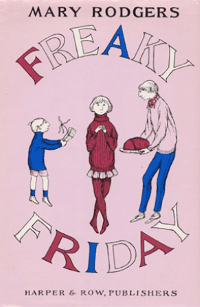
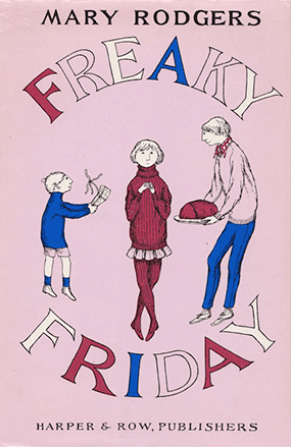
Here’s the original Edward Gorey cover:

And the cover for the sequel, A Billion for Boris:

The cover of the paperback edition Mary Grace read, which left her longing for her 1970s copy, turns out to be nowhere to be found on the internet.

Mentioned in this episode:

The intro to the PBS show Mystery!, with animation based on illustrations by Edward Gorey.

Summer Switch by Mary Rodgers, in which Ape Face and his dad switch bodies, with less-than-hilarious results.

Freaky Monday, a supposedly co-authored by actually more like licensed 2009 addition to the franchise.

The 1976 movie starring Barbara Harris and Jodie Foster.

The 2003 movie starring Jamie Lee Curtis and Lindsay Lohan.

Vice Versa, F. Anstey’s 1882 novel about a British man who switches bodies with his son.

The podcast is hosted by Buzzsprout at rereadingourchildhood.buzzsprout.com and is available on SpotifyApple Podcasts, and other podcast platforms. You can listen to it on Buzzsprout here.

You can find Debby’s author interviews on her blog, Books Q&A by Deborah Kalb, and Mary Grace’s adventures in the 1920s on her blog, My Life 100 Years Ago.

This episode was edited by Adam Linder of Bespoken Podcasting.

Rereading Little Witch and The Little Leftover Witch

(You can listen to this episode here.)

Deborah and Mary Grace celebrated Halloween by reading two books about witches, Little Witch by Anna Elizabeth Bennett, which was published in 1953, and The Little Leftover Witch by Florence Laughlin, which was published in 1960. Both books are about lonely little witches who find homes with non-magical families. Deborah had read both books as a child; both were new to Mary Grace.

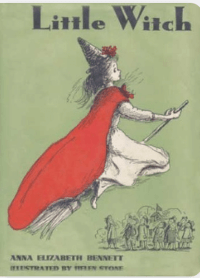
Here’s the original cover of The Little Witch, with illustrations by Helen Stone. Two of Stone’s other books were selected as Caldecott Honor Books.

Here’s the original cover of The Little Leftover Witch, which gives you some idea of the illustrations by Sheila Greenwald, which Debby enjoyed as a child and missed in the current edition, which doesn’t have illustrations.

Other witch-related books mentioned on the episode:

The Witch of Blackbird Pond by Elizabeth Speare (1958)

The Active Enzyme Lemon-Freshened, Junior High School Witch by E. W. Hildick (1973)

The Wizard of Oz books by L. Frank Baum

The Harry Potter books by J.K. Rowling

And, finally, Jennifer, Hecate, Macbeth, William McKinley, and Me, Elizabeth by E. L. Konigsburg, which was featured on our second episode.

The podcast is hosted by Buzzsprout at rereadingourchildhood.buzzsprout.com and is available on SpotifyApple Podcasts, and other podcast platforms. You can listen to it on Buzzsprout here.

You can find Debby’s author interviews on her blog, Books Q&A by Deborah Kalb, and Mary Grace’s adventures in the 1920s on her blog, My Life 100 Years Ago.

This episode was edited by Adam Linder of Bespoken Podcasting.

Rereading A Wrinkle in Time by Madeleine L’Engle

(You can listen to this episode here.)

On this episode, Mary Grace and Deborah reread Madeleine L’Engle’s 1962 classic A Wrinkle in TIme, about…well, it’s hard to describe what it’s about. A troubled girl. A missing father. A genius brother. Three mysterious women. Interplanetary adventure. An evil, throbbing brain. None of this does justice to a book that two science fiction-hating girls ended up loving, and that their grown-up selves had a wonderful time returning to.

Here’s the original cover, which perfectly captures its Cold War atmosphere:

Mentioned on this episode:

Listening for Madeleine, Leonard Marcus’s book of interviews with people in L’Engle’s life.

Cynthia Zarin’s controversial 2004 New Yorker profile of L’Engle.

The ALA website listing the 100 most challenged books of the 1990s, with A Wrinkle in Time at #23.

The recent PEN America report on book banning in the United States.

A 2001 New York Times interview with L’Engle.

The trailer to the 2018 movie version of A Wrinkle in Time.

The Paris Review blog post where Mary Grace read that Madeleine L’Engle rewrote her novel A House Like a Lotus to give it a new protagonist.

The podcast is hosted by Buzzsprout at rereadingourchildhood.buzzsprout.com and is available on Spotify, Apple Podcasts, and other podcast platforms. You can listen to it on Buzzsprout here.

You can find Debby’s author interviews on her blog, Books Q&A by Deborah Kalb, and Mary Grace’s adventures in the 1920s on her blog, My Life 100 Years Ago.

This episode was edited by Adam Linder of Bespoken Podcasting.

Rereading The Great Brain by John D. Fitzgerald

You can listen to this episode here.

On this episode, Deborah and Mary Grace read John D. Fitzgerald’s 1967* novel The Great Brain, the first book in the series featuring John, the narrator, and his older brother Tom, the eponymous Great Brain, who wreaks havoc on their late 19th-century Utah town with his devious moneymaking ventures. Mary Grace, who did not read this book as a child, suspects that this sometimes harrowing read is Deborah’s revenge for making her read The Owl Service.

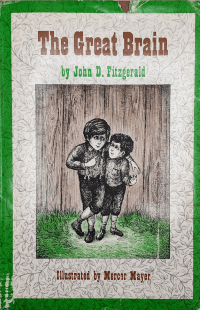
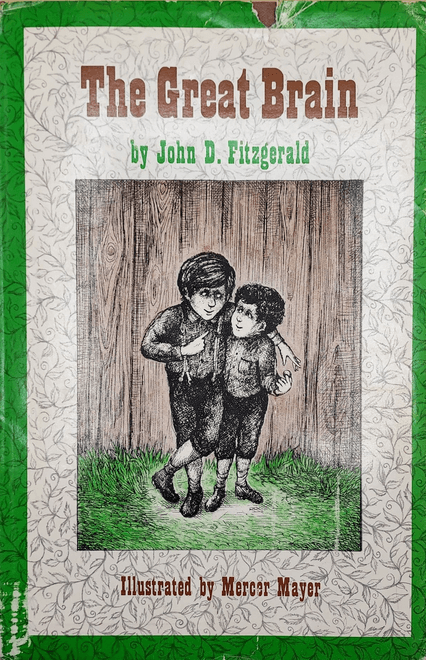
The first edition cover gives a good sense of Mercer Mayer’s illustrations.

Here’s the Amazon review Mary Grace mentions that gives parents a heads-up about disturbing content in the book.

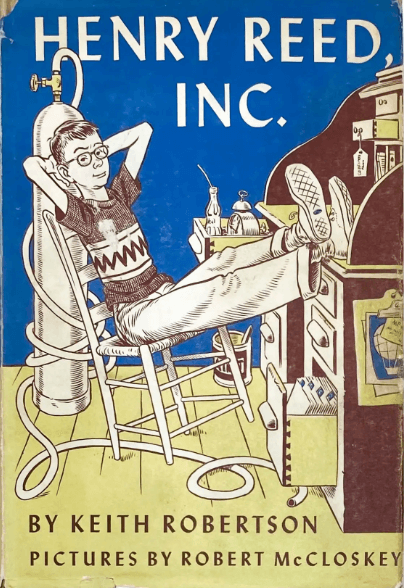
Mary Grace recommends the Encyclopedia Brown books, featured on a previous episode, for fans of The Great Brain. She also recommends Two Are Better than One and Louly, by Carol Ryrie Brink, which are set in a small Idaho town in the early 20th century. Deborah recommends the Henry Reed series, also featured on a previous episode.

Here’s a June 2023 article by New York Times opinion writer Carlos Lozada, who was born in Peru, about his love for The Great Brain, which he read after his family moved to the United States. Lozada jumps into the article’s comments section to share more Great Brain love with readers.

The podcast is hosted by Buzzsprout at rereadingourchildhood.buzzsprout.com and is available on SpotifyApple Podcasts, and other podcast platforms.

You can find Deborah’s author interviews on her blog, Books Q&A by Deborah Kalb, and you can find Mary Grace’s adventures in the 1920s on her blog, My Life 100 Years Ago.

This episode was edited by Adam Linder of Bespoken Podcasting.

*Mary Grace says incorrectly that it was published in 1969.

Rereading The Owl Service by Alan Garner

You can listen to this episode here.

In this episode, Mary Grace and Deborah reread Alan Garner’s Carnegie Medal-winning 1967 novel The Owl Service, which tells the story of three teenagers, Alison, Gwyn, and Roger, who find themselves reliving a Welsh legend of love and betrayal. Word to the wise: read it, but not right before bed like Mary Grace did!

The Owl Service has had many editions, and many covers, over the years. Here’s the first-edition cover.

Here’s the current edition that Mary Grace and Deborah read this time around, except it’s much cooler-looking in real life because what looks orange in the photo is actually a shiny copper color.

Here’s a cheesy horror movie-style cover:

And another one:

Here’s a 2021 Guardian profile of Garner.

Mary Grace recommends Lloyd Alexander’s The Chronicles of Prydain series and Susan Cooper’s The Dark is Rising series for fans of The Owl Service.

At the beginning of the book, Alison becomes obsessed with a set of dinner plates with pictures of owls or flowers, depending on how you look at them. As Mary Grace mentions, the plates in the book were inspired by a real-life set that Garner saw at someone’s house. She rashly promised to put a photo of the plates on the website, but it turns out that it’s copyrighted. You can see it at the Bodleian Libraries‘ Facebook page.

The podcast is hosted by Buzzsprout at rereadingourchildhood.buzzsprout.com and is available on Spotify, Apple Podcasts, and other podcast platforms. You can listen to it on Buzzsprout here.

You can find Debby’s author interviews on her blog, Books Q&A by Deborah Kalb, and Mary Grace’s adventures in the 1920s on her blog, My Life 100 Years Ago.

This episode was edited by Adam Linder of Bespoken Podcasting.

Rereading Encyclopedia Brown, Boy Detective by Donald J. Sobol

You can listen to this episode here.

Encyclopedia Brown, Boy Detective, which was published in 1963, is the first of Donald J. Sobol’s 29-book series featuring Encyclopedia, the boy detective who always gets his man (or boy, or girl). The solution to each crime is revealed at the end of the book. In this episode, Deborah and Mary Grace match wits with Encyclopedia, and with each other, in identifying the culprits.

Here’s the cover of the first edition. The current edition has a different cover but still features the original illustrations by Leonard Shortall, who went on to illustrate many other Encyclopedia Brown books.

You can find the full Encyclopedia Brown series on Goodreads.

You can find Two-Minute Mysteries, a collection of Sobol’s syndicated columns for adults, here.

Sobol’s New York Times obituary, published on July 16, 2012, is here.

Mary Grace recommends the Danny Dunn books for fans of Encyclopedia Brown. Clarifications: Danny Dunn does not, in fact, go to the moon, as Mary Grace thought he might have, but he does go to outer space in Danny Dunn and the Anti-Gravity Paint. Also, the scientist in the book is not his uncle but his mother’s employer, Professor Bullfinch.

Deborah recommends the Henry Reed books for Encyclopedia fans. We discussed Henry Reed, Inc. on the third episode of Rereading Our Childhood.

The podcast is hosted by Buzzsprout at rereadingourchildhood.buzzsprout.com and is available on SpotifyApple Podcasts, and other podcast platforms. You can listen to it on Buzzsprout here.

You can find Deborah’s author interviews on her blog, Books Q&A by Deborah Kalb, and you can find Mary Grace’s adventures in the 1920s on her blog, My Life 100 Years Ago.

This episode was edited by Adam Linder of Bespoken Podcasting.

Rereading “B” is for Betsy by Carolyn Haywood

(You can listen to this episode here.)

On this episode, Mary Grace and Deborah celebrate the beginning of a new school year by rereading “B” is for Betsy, Carolyn Haywood’s 1939 novel about a little girl navigating the complicated world of first grade. It was the first in a long series of books about Betsy and her friends. This was the first book that Mary Grace remembers checking out of the library and reading.

You can find the twelve books in the Betsy series on Goodreads here. As Deborah mentions, Haywood also wrote several other series, including one about a boy named Eddie and one about a boy named Penny. You can find these series on Goodreads here (Eddie) and here (Penny).

Here’s what Mary Grace wrote on her blog about rereading Dorothy Canfield Fisher’s Understood Betsy (it’s #7 on the list).

Here’s the original cover of “B” is for Betsy. It gives you an idea of the illustrations, which Mary Grace isn’t a big fan of.

Here’s the cover of the current edition, which Mary Grace and Deborah read:

Haywood’s New York Times obituary, from January 12, 1990, which, as Mary Grace mentions, erroneously says that “B” is for Betsy was Haywood’s first book, is here.

Here’s the cover of Haywood’s actual first book, When I Grow Up:

The Free Library of Philadelphia blog post about Haywood’s relationship with artist Violet Oakley and the group of women artists in Philadelphia who were known as the Red Rose Girls is here.

Here’s a photo of Haywood and Edith Emerson, a fellow student of Oakley, painting the ceiling of Vassar’s Alumnae House, which Oakley designed, in 1924. (Mary Grace said erroneously on the podcast that the photo was of Haywood and Oakley.) You can read about the project here.

Violet Oakley Visual Resources Collection, Philadelphia Museum of Art

Here’s the Free Library of Philadelphia blog post titled “Carolyn Haywood: All Sugar, No Spice.”

The Free Library of Philadelphia blog post about an unpublished novel about a boy whose father is in jail for selling heroin that was found in Haywood’s papers is here.

Deborah and Mary Grace recommend Beverly Cleary’s Ramona books for fans of “B” is for Betsy.

The podcast is hosted by Buzzsprout at rereadingourchildhood.buzzsprout.com and is available on Spotify, Apple Podcasts, and other podcast platforms. You can listen to it on Buzzsprout here.

You can find Deborah’s author interviews on her blog, Books Q&A by Deborah Kalb, and you can find Mary Grace’s adventures in the 1920s on her blog, My Life 100 Years Ago.

Rereading Ballet Shoes by Noel Streatfeild
You can listen to this episode here.

On this episode, Deborah and Mary Grace discuss Ballet Shoes, Noel Streatfeild’s classic 1936 story of a trio of adopted sisters, Pauline, Petrova, and Posy, who attend a school for professional children in the performing arts in London. Ballet Shoes is the first in what became a series of “Shoes” books about children working in the theater, the circus, etc.

As Deborah and Mary Grace mention, the girls perform in these plays:

The Blue Bird, by Maurice Maeterlinck (a large chunk of which, weirdly, appears in the text of Ballet Shoes)

A Midsummer Night’s Dream, by William Shakespeare

Other Noel Streatfeild books mentioned in the podcast:

Circus Shoes (1938). As Deborah mentions, several of Streatfeild’s books were retitled to capitalize on the popularity of Ballet Shoes. This book was originally titled The Circus is Coming.

Skating Shoes (1951). This is the American title; it was published in the UK as White Boots.

The Whicharts (1931). As Deborah mentions, Streatfeild’s first novel, which is for adults, also features three adopted sisters. (According to an episode on Ballet Shoes on the wonderful Backlisted podcast, the books have identical openings.)

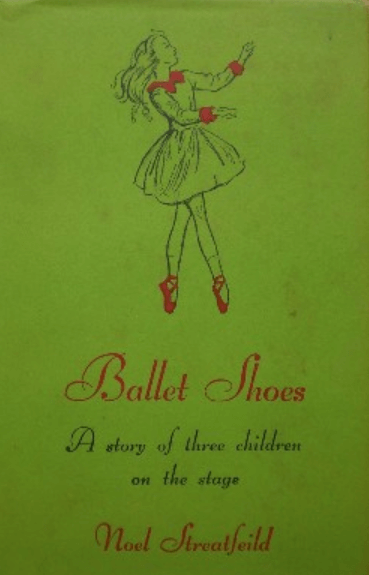
Here’s the cover of the first edition of Ballet Shoes. This will give you an idea of the what the illustrations by Ruth Jervis, who was Streatfeild’s sister, were like. They’re not included in most current editions, although the Puffin edition that Mary Grace bought in London has them.

Recommended by Mary Grace for fans of Ballet Shoes: We Danced in Bloomsbury Square by Jean Estoril (out of print, available from used booksellers).

Recommended by Deborah for fans of Ballet Shoes: other books in the Shoes series. Shoes books available in the United States include Theater Shoes and Dancing Shoes.

The podcast is hosted by Buzzsprout at rereadingourchildhood.buzzsprout.com and is available on Spotify, Apple Podcasts, and other podcast platforms. You can listen to it on Buzzsprout here.

You can find Debby’s author interviews on her blog, Books Q&A by Deborah Kalb, and Mary Grace’s adventures in the 1920s on her blog, My Life 100 Years Ago.

This episode was edited by Adam Linder of Bespoken Podcasting.