Tag Archives: British books

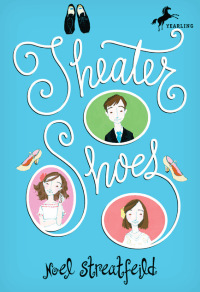
Cover of Noel Streatfeild's Theater Shoes, cameos of three children against blue background.

Rereading Theater Shoes, with Jean Freedman

(You can listen to this episode here.)

Writer and scholar Jean Freedman joins us to talk about Noel Streatfeild’s 1944 book Theater Shoes (originally published in the UK as Curtain Up), the story of three children who attend a theatrical school. We discuss London during World War II and welcome the (offstage) reappearance of the three sisters in Streatfeild’s beloved Ballet Shoes (1936), who are now young women pursuing their careers.

Mentioned on this episode:

Books by Jean Freedman: Whistling in the Dark: Memory and Culture in Wartime London and Peggy Seeger: A Life of Music, Love, and Politics

Other books by Noel Streatfeild: Circus Shoes, Dancing Shoes, Tennis Shoes, Skating Shoes

Mrs. Miniver (1942), trailer here

A website on Streatfeild that includes a detailed discussion on Theater Shoes/Curtain Up

Books and other works of literature mentioned in Theater Shoes: Little Women by Louisa May Alcott, Little Lord Fauntleroy by Frances Hodgson Burnett, David Copperfield by Charles Dickens, Alice’s Adventures in Wonderland by Lewis Carroll, A Midsummer Night’s Dream and The Tempest by William Shakespeare, The Princess and the Pea by Hans Christen Andersen

Recommended by Jean: Little Women by Louisa May Alcott, The Adventures of Tom Sawyer by Mark Twain, A Little Princess by Frances Hodgson Burnett; Anne of Green Gables by L.M. Montgomery, The Witch of Blackbird Pond by Elizabeth George Speare, Johnny Tremain by Esther Forbes, A Wrinkle in Time by Madeleine L’Engle, and Dress Rehearsal by Monica Stirling; books by Beverly Cleary and Judy Blume; fairy tales by Oscar Wilde

Recommended by Debby: The Saturdays by Elizabeth Enright; Half Magic by Edward Eager

Recommended by Mary Grace: The Saturdays by Elizabeth Enright; The Lion, the Witch, and the Wardrobe by C.S. Lewis

Other episodes: Rereading Ballet Shoes by Noel Streatfeild; Rereading Pippi Longstocking by Astrid Lindgren; Rereading Little Women, with Jamie Stiehm; Rereading The Witch of Blackbird Pond by Elizabeth George Speare

The podcast is hosted by Buzzsprout at rereadingourchildhood.buzzsprout.com and is available on SpotifyApple Podcasts, and other platforms.

You can find Deborah at deborahkalb.com, Mary Grace at My Life 100 Years Ago, and Jean at jeanfreedman.com.

This episode was edited by Adam Linder of Bespoken Podcasting.

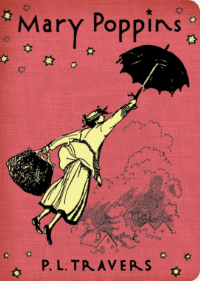
Mary Poppins by P.L. Travers, cover, Mary Poppins flying with umbrella

Rereading Mary Poppins by P.L. Travers

(You can listen to this episode here.)

On this episode, we reread Mary Poppins, P.L. Travers’s beloved 1934 classic. We discuss the difference between the book and the movie version of the magical nanny, changes in the book to remove racist portrayals, and Travers’s strange and interesting life.

Mentioned on the episode:

Other books in the series:

Mary Poppins Comes Back (1935)

Mary Poppins Opens the Door (1943)

Mary Poppins in the Park (1952)

Also mentioned:

“A Spoonful of Bile,” Kathryn Hughes’ 2005 Guardian review of Mary Poppins She Wrote: A Biography of P.L. Travers.

A Goodreads review of Mary Poppins by Julie G that discusses racism in Mary Poppins.

A post on the website “American Indians in Children’s Literature” that discusses racist language in the book (with side-by-side examples of original and revised passages from the “Bad Tuesday” chapter) and Travers’s experiences with American Indian communities during World War II.

Travers’s 1996 New York Times obituary that repeats her untrue claim that her father was a sugar planter (gift link)

The trailer for Mary Poppins Returns, the 2018 movie sequel

Alli Hoff Kosik’s childhood rereading podcast, SSR, which recently signed off after seven years and over 300 episodes.

Recommended for fans of Mary Poppins:

The Wonderful Wizard of Oz and Pippi Longstocking (Deborah)

The Edward Eager magic books, Ballet Shoes, and Harriet the Spy (Mary Grace)

Other Rereading Our Childhood episodes mentioned:

Rereading Ballet Shoes by Noel Streatfeild

Rereading The Wonderful Wizard of Oz by L. Frank Baum

The podcast is hosted by Buzzsprout at rereadingourchildhood.buzzsprout.com and is available on SpotifyApple Podcasts, and other platforms.

You can find Deborah at deborahkalb.com and Mary Grace’s adventures in the 1920s on her blog, My Life 100 Years Ago.

This episode was edited by Adam Linder of Bespoken Podcasting.

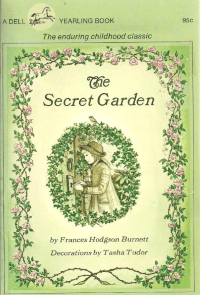
Cover of The Secret Garden by Frances Hodgson Burnett, 1970s paperback, Mary enterin garden

Rereading The Secret Garden by Frances Hodgson Burnett

(You can listen to this episode here.)

On this episode, we reread Frances Hodgson Burnett’s beloved 1911 classic The Secret Garden, about Mary, a neglected girl who discovers a garden on her uncle’s Yorkshire estate that has been locked up for ten years. We discuss the magic of secret places and Hodgson’s surprising ties to the United States, including periods living in a Tennessee log cabin and in Washington, D.C.

Mentioned on this episode:

Other books by Burnett:

A Little Princess (originally published as Sara Crewe) (1905)

Little Lord Fauntleroy (1886)

Through One Administration (1881), an adult novel about politics and society in Washington, D.C.

Also mentioned:

The serialization of The Secret Garden in American Magazine beginning in November 1910

The 2020 film adaptation, with Colin Firth as Mary’s uncle (trailer here)

The 1987 Hallmark Hall of Fame adaptation, also featuring Colin Firth, this time as grown-up Colin (trailer here)

The 1949 film adaptation, starring Margaret O’Brien (trailer here)

Deborah’s recommendations for fans of The Secret Garden: A Little Princess by Frances Hodgson Burnett; Jane Eyre by Charlotte Brontë; Rebecca by Daphne du Maurier; The Secret Garden retellings on Goodreads, including The Painted Garden by Noel Streatfeild

Mary Grace’s recommendations for fans of The Secret Garden: Understood Betsy by Dorothy Canfield Fisher. (There is a brief review of the book on the 1919 book list on her blog, My Life 100 Years Ago.)

The podcast is hosted by Buzzsprout at rereadingourchildhood.buzzsprout.com and is available on SpotifyApple Podcasts, and other platforms.

You can find Deborah at deborahkalb.com and Mary Grace’s adventures in the 1920s on her blog, My Life 100 Years Ago.

This episode was edited by Adam Linder of Bespoken Podcasting.
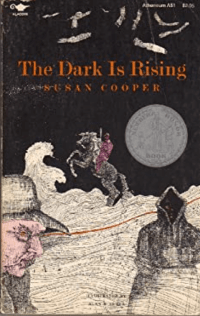
Rereading The Dark is Rising by Susan Cooper

In this episode, we read Susan Cooper’s 1973 novel The Dark is Rising, which was a Newbery Honor Book. It’s the story of Will, a British boy who discovers on his eleventh birthday that he’s the last of the Old Ones, destined to fight against the forces of the Dark. It takes place over the period from the winter solstice to the twelfth day of Christmas, so it’s a great holiday season read. (If the whole “magical British boy/eleventh birthday” thing sounds familiar, Cooper is widely considered to have influenced J.K. Rowling.)

Mentioned on this episode:

Other books in the The Dark is Rising series:

Over Sea, Under Stone (1965)

Greenwitch (1974)

The Grey King (1975)

Silver on the Tree (1977)

Also by Susan Cooper:

Dawn of Fear

Also mentioned:

The Phoenix and the Carpet by E. Nesbit, which a woman reads to the children of Will’s village during a snowstorm.

The 2022 BBC radio adaption of The Dark is Rising, available here

The Seeker, the 2007 movie based in The Dark is Rising, trailer here

Kids’ reviews of The Dark is Rising at Common Sense Media

2020 Backlisted podcast episode on The Dark is Rising

2022 Backlisted podcast episode on Ballet Shoes

The Lost Land of Susan Cooper, Susan Cooper’s official website

Other episodes mentioned:

Rereading The Saturdays by Elizabeth Enright

Rereading A Wrinkle in Time by Madeleine L’Engle

Rereading Half Magic by Edward Eager

Rereading The Owl Service by Alan Garner

Rereading Ballet Shoes by Noel Streatfeild

Rereading The Book of Three by Lloyd Alexander

Rereading Black Hearts in Battersea by Joan Aiken

Rereading February’s Road by John Verney

Rereading The Children of Green Knowe by L.M. Boston

Recommended for fans of The Dark is Rising: the Harry Potter books by J.K. Rowling, The Book of Three by Lloyd Alexander, and Black Hearts in Battersea by Joan Aiken (Deborah); The Once and Future King by T.H. White and the Callendar family series, including Friday’s Tunnel and February’s Road, by John Verney.

You can find Deborah’s author interviews at Books Q&A by Deborah Kalb and Mary Grace’s adventures in the 1920s on her blog, My Life 100 Years Ago.

This episode was edited by Adam Linder of Bespoken Podcasting.
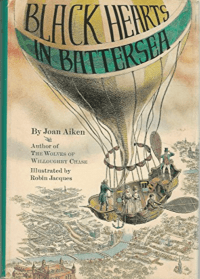
Rereading Black Hearts in Battersea by Joan Aiken

(You can listen to this episode here.)

Mary Grace and Deborah commemorate the 100th anniversary of British author Joan Aiken’s birth by reading Black Hearts in Battersea, the second in her Wolves Chronicles series, featuring resourceful orphans and sinister plots in an alt-history version of nineteenth-century London.

(Note: Mary Grace thought for fifty years that Dido Twite’s first name was pronounced DEE-doh rather than DIE-doh, and she slips back to this pronunciation a few times.)

Mentioned on the episode:

Other books in the Wolves Chronicles series:

The Wolves of Willoughby Chase

Nightbirds on Nantucket

Other books by Joan Aiken:

Jane Fairfax

Other Rereading Our Childhood episodes:

Rereading February’s Road by John Verney

Rereading The Mysterious Disappearance of Leon (I Mean Noel) by Ellen Raskin

Rereading Freaky Friday by Mary Rodgers

Rereading Ramona the Pest by Beverly Cleary

Rereading The Children of Green Knowe by L.M. Boston

Rereading The Owl Service by Alan Garner

Rereading The Book of Three by Lloyd Alexander

Also mentioned:

The Shortest History of England by James Hawes

Post on Black Hearts in Battersea on the blog A Son of the Rock (question King James’s Scottish accent)

“What’s Your 1918 Girl Job? A Quiz,” post on Mary Grace’s blog My Life 100 Years Ago that mentions Jane Fairfax. (Jane Fairfax also comes up on another post, “Jane Austen’s Life 100 Years Ago.”)

“Writing Without Limits: Joan Aiken’s The Wolves of Willoughby Chase Series,” Albion Magazine Online (discusses Aiken taking time to settle on a main character for the series)

The best and worst of April 1918: Magazines, stories, faint praise, and neologisms (Mary Grace’s blog post that mentions Conrad Aiken)

A well-known letter from T.S. Eliot to Conrad Aiken is quoted here.

The Practical Magic of Joan Aiken, the Greatest Children’s Writer You’ve Likely Never Read (The New Yorker)*

Blog on Joan Aiken by her daughter Lizza Aiken

Blog post by Lizza Aiken about Aiken’s partnership with illustrator Pat Marriot

Locus Magazine interview with Aiken in which she discusses The Chronicles of Narnia and the BBC adaptation of Black Hearts in Battersea

Suggested reading for fans of Black Hearts in Battersea: Other books in the series (Deborah), The Book of Three and its sequels (Mary Grace)

The podcast is hosted by Buzzsprout at rereadingourchildhood.buzzsprout.com and is available on SpotifyApple Podcasts, and other platforms.

You can find Deborah’s author interviews on her blog, Books Q&A by Deborah Kalb, and Mary Grace’s adventures in the 1920s on her blog, My Life 100 Years Ago.

This episode was edited by Adam Linder of Bespoken Podcasting.
*Mary Grace took offense at this headline.

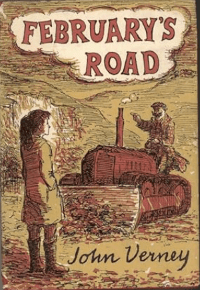
Rereading February’s Road by John Verney

(You can listen to this episode here.)

Mary Grace introduces Deborah to John Verney’s 1961 novel February’s Road. It’s the second volume in a series about the large and eccentric Callendar family. In this book, 13-year-old February Callendar unearths skullduggery involving plans to build a road through her family’s property.

Other books by John Verney mentioned on the episode:

Friday’s Tunnel (1959), also narrated by February.

Ismo (1964), told from the point of view of February’s sister Gail. It’s the only book in the series that’s told in the third person.

Seven Sunflower Seeds (1968), narrated by February’s younger sister Berry.

Samson’s Hoard (1973), also narrated by Berry. This book doesn’t seem to have been published in the United States and Mary Grace didn’t read as a child.

Going to the Wars (1955), Verney’s well-regarded memoir about his experiences in World War II.

A Dinner of Herbs (1966), the follow-up to Going to the Wars.

Also mentioned:

Mary Grace mentions The Arm of the Starfish (1965) by Madeleine L’Engle, which, like the Callendar family books, involves young people involved in international intrigue.

Mary Grace and Deborah talk about the word “zany,” used on the covers of our old copies of both February’s Road and (less accurately) Harriet the Spy, which we discussed on a previous episode.

You can check out Verney’s illustrations in an electronic copy of February’s Road on HathiTrust (it’s unclear why, since it’s still under copyright). The link goes to an illustration where February’s father is throwing the mail up in the air in disgust.

A post about February’s Road on the blog Clothes in Books, which includes a comment by Verney’s son Sebastian saying that the character Mike Spillergun’s name was a reference to the comedian Spike Milligan. (This post includes one of Mary Grace’s favorite passages, where February and her frenemy Helen are giving each other the once-over at a party.)

Several commentators have noted the similarity between Verney’s illustrations and those of Edward Ardizzone, a well-known British illustrations. The striking similarity can be seen in a self-portrait by Ardizzone.

Other art of Verney’s, along with a photograph of his family, can be found here.

Mary Grace mentions an obituary in The Independent that says that Verney could have been a significant artist if not for his experiences in World War II.

As Mary Grace mentions, Verney devoted much of his later life to work on historic preservation with the Farnham Trust. There is a post on the Farnham Trust’s website about a centenary lunch in honor of Verney. It includes a photograph of Verney’s wife, children, and grandchildren.

Mary Grace mentions that this is the third episode featuring a British writer who devoted a lot of time to historic preservation. The other episodes were on Alan Garner’s The Owl Serviceand L.M. Boston’s The Children of Green Knowe.

The writer Jojo Moyes said in a 2011 Daily Mail interview that Friday’s Tunnel was the book that first gave her the reading bug.  

Mary Grace says that, after reading the Callendar family books as a child, she went on to be a fan of Margaret Drabble’s early novels. Her favorite was The Millstone, published in 1965.

Deborah mentions Ballet Shoes, the subject of a previous episode, as one of her favorite British books when she was a child.

Mary Grace recalls how much she enjoyed the British words and expressions in Verney’s books as a child and bemoans the practice of adapting British books, including the Harry Potter books, for an American audience. This website provides a list of words and phrases that were changed in the Harry Potter books—“sweets” to “candy,” etc.

Mary Grace mentions the discussion on the episode on Pippi Longstockingon recent edits to that book’s text.

Deborah recommends the Madeleine L’Engle books to fans of February’s Road, since they take place in a similar time period and involve government secrets.She and Mary Grace discussed L’Engle’s classic A Wrinkle in Time on a previous episode.

Mary Grace says that fans of February’s Road may enjoy Nancy Mitford’s novels The Pursuit of Love and Love in a Climate when they are older, since both are about large, eccentric upper-class British families.

The podcast is hosted by Buzzsprout at rereadingourchildhood.buzzsprout.com and is available on SpotifyApple Podcasts, and other podcast platforms.

You can find Deborah’s author interviews on her blog, Books Q&A by Deborah Kalb, and Mary Grace’s adventures in the 1920s on her blog, My Life 100 Years Ago.

This episode was edited by Adam Linder of Bespoken Podcasting.
Rereading The Owl Service by Alan Garner

You can listen to this episode here.

In this episode, Mary Grace and Deborah reread Alan Garner’s Carnegie Medal-winning 1967 novel The Owl Service, which tells the story of three teenagers, Alison, Gwyn, and Roger, who find themselves reliving a Welsh legend of love and betrayal. Word to the wise: read it, but not right before bed like Mary Grace did!

The Owl Service has had many editions, and many covers, over the years. Here’s the first-edition cover.

Here’s the current edition that Mary Grace and Deborah read this time around, except it’s much cooler-looking in real life because what looks orange in the photo is actually a shiny copper color.

Here’s a cheesy horror movie-style cover:

And another one:

Here’s a 2021 Guardian profile of Garner.

Mary Grace recommends Lloyd Alexander’s The Chronicles of Prydain series and Susan Cooper’s The Dark is Rising series for fans of The Owl Service.

At the beginning of the book, Alison becomes obsessed with a set of dinner plates with pictures of owls or flowers, depending on how you look at them. As Mary Grace mentions, the plates in the book were inspired by a real-life set that Garner saw at someone’s house. She rashly promised to put a photo of the plates on the website, but it turns out that it’s copyrighted. You can see it at the Bodleian Libraries‘ Facebook page.

The podcast is hosted by Buzzsprout at rereadingourchildhood.buzzsprout.com and is available on Spotify, Apple Podcasts, and other podcast platforms. You can listen to it on Buzzsprout here.

You can find Debby’s author interviews on her blog, Books Q&A by Deborah Kalb, and Mary Grace’s adventures in the 1920s on her blog, My Life 100 Years Ago.

This episode was edited by Adam Linder of Bespoken Podcasting.
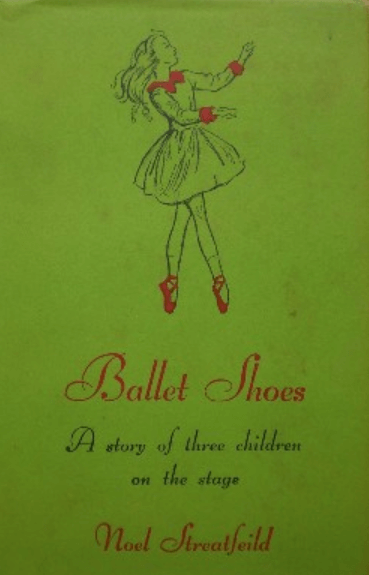
Rereading Ballet Shoes by Noel Streatfeild

You can listen to this episode here.

On this episode, Deborah and Mary Grace discuss Ballet Shoes, Noel Streatfeild’s classic 1936 story of a trio of adopted sisters, Pauline, Petrova, and Posy, who attend a school for professional children in the performing arts in London. Ballet Shoes is the first in what became a series of “Shoes” books about children working in the theater, the circus, etc.

As Deborah and Mary Grace mention, the girls perform in these plays:

The Blue Bird, by Maurice Maeterlinck (a large chunk of which, weirdly, appears in the text of Ballet Shoes)

A Midsummer Night’s Dream, by William Shakespeare

Other Noel Streatfeild books mentioned in the podcast:

Circus Shoes (1938). As Deborah mentions, several of Streatfeild’s books were retitled to capitalize on the popularity of Ballet Shoes. This book was originally titled The Circus is Coming.

Skating Shoes (1951). This is the American title; it was published in the UK as White Boots.

The Whicharts (1931). As Deborah mentions, Streatfeild’s first novel, which is for adults, also features three adopted sisters. (According to an episode on Ballet Shoes on the wonderful Backlisted podcast, the books have identical openings.)

Here’s the cover of the first edition of Ballet Shoes. This will give you an idea of the what the illustrations by Ruth Jervis, who was Streatfeild’s sister, were like. They’re not included in most current editions, although the Puffin edition that Mary Grace bought in London has them.

Recommended by Mary Grace for fans of Ballet Shoes: We Danced in Bloomsbury Square by Jean Estoril (out of print, available from used booksellers).

Recommended by Deborah for fans of Ballet Shoes: other books in the Shoes series. Shoes books available in the United States include Theater Shoes and Dancing Shoes.

The podcast is hosted by Buzzsprout at rereadingourchildhood.buzzsprout.com and is available on Spotify, Apple Podcasts, and other podcast platforms. You can listen to it on Buzzsprout here.

You can find Debby’s author interviews on her blog, Books Q&A by Deborah Kalb, and Mary Grace’s adventures in the 1920s on her blog, My Life 100 Years Ago.

This episode was edited by Adam Linder of Bespoken Podcasting.