Category Archives: 1960s

Cover of Encyclopedia Brown Gets the Clues by Donald Sobol, Encyclopedia and Bugs Meany

Rereading Encyclopedia Brown Finds the Clues by Donald J. Sobol

(You can listen to this episode here.)

For our third annual Encyclopedia Brown episode, we matched wits with each other and with Encyclopedia in trying to crack the cases in Encyclopedia Brown Finds the Clues, which was published in 1966. The relevant clues are included in our discussion, so you can solve along with us. We discussed the origins of Bugs Meany’s hat and solved the mystery of what state Idaville is in. Also, Mary Grace mispronounced “divining rod” about 15 times.

Mentioned on this episode:

Other Encyclopedia Brown books:

Encyclopedia Brown, Boy Detective

Encyclopedia Brown and the Case of the Secret Pitch

Other Rereading Our Childhood episodes:

Rereading Johnny Tremain by Esther Forbes

Rereading Henry Reed, Inc. by Keith Robertson

Also mentioned:

Goodreads review of Encyclopedia Brown Finds the Clues by Chance Hansen

Reddit thread on what state Encyclopedia lives in

“Donald Sobol and the Case of the Elusive Mystery Writer,” interview with Donald Sobol by Elizabeth Weinstein, Oberlin Alumni Magazine, Fall 2011

Clip from a 2024 episode of Futurama featuring Wikipedia Brown

The podcast is hosted by Buzzsprout at rereadingourchildhood.buzzsprout.com and is available on SpotifyApple Podcasts, and other platforms.

You can find Deborah at deborahkalb.com and Mary Grace’s adventures in the 1920s at My Life 100 Years Ago.

This episode was edited by Adam Linder of Bespoken Podcasting.
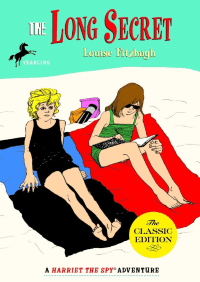
Cover of The Long Secret by Louise Fitzhugh, Harriet the Spy and Beth Ellen on the beach

Rereading The Long Secret by Louise Fitzhugh

(You can listen to this episode here.)

For this episode, we reread Louise Fitzhugh’s 1965 novel The Long Secret, the sequel to Harriet the Spy. We discussed Harriet’s summer friendship with her classmate Beth Ellen, a minor character in Harriet the Spy, the mystery of who is leaving notes for residents of the Long Island town of Water Mill, and Fitzhugh’s fascinating but tragic life.

Mentioned on this episode:

Other books by Fitzhugh:

Suzuki Bean, written by Sandra Scoppettone, illustrated by Louise Fitzhugh (1961)

Harriet the Spy (1964)

Nobody’s Family is Going to Change (1974)

Sport (1980)

Also mentioned:

Sometimes You Have to Lie: The Life and Times of Louise Fitzhugh, Renegade Author of Harriet the Spy, by Leslie Brody

Deborah’s interview with Leslie Brodie on her blog Book Q&A’s with Deborah Kalb

The Tap Dance Kid, the Broadway musical based on Nobody’s Family is Going to Change (highlights from the 2022 Encores! performance here)

Gloria Vanderbilt’s New York Times review of Harriet the Spy, November 22, 1964

Goodreads reviews of The Long Secret by Robyn and Jamie

Recommended by Deborah: Freaky Friday (1972) and A Billion for Boris (1974) by Mary Rodgers; Are You There God? It’s Me, Margaret (1970) by Judy Blume

Recommended by Mary Grace: Magic by the Lake by Edward Eager (1957); The Summer of the Swans by Betsy Byars (1970); All-of-a-Kind Family by Sydney Taylor (1951)

Previous episodes of Rereading Our Childhood:

Rereading Harriet the Spy by Louise Fitzhugh

Rereading Are You There God? It’s Me, Margaret by Judy Blume

Rereading Freaky Friday by Mary Rodgers

Rereading Magic by the Lake by Edward Eager

Rereading The Summer of the Swans by Betsy Byars

Rereading All-of-A-Kind Family by Sydney Taylor

The podcast is hosted by Buzzsprout at rereadingourchildhood.buzzsprout.com and is available on SpotifyApple Podcasts, and other platforms.

You can find Deborah at deborahkalb.com and Mary Grace’s adventures in the 1920s at My Life 100 Years Ago.

This episode was edited by Adam Linder of Bespoken Podcasting.

Our Favorite Children’s Books from 60 Years Ago

(You can listen to this episode here.)

For our last episode of 2024, we talked about our favorite children’s books of 60 years ago, which we defined as 1964-1966—a great era for children’s books.

Here are our favorites, but it’s more fun if you listen to the episode first. Each of us picked five. We disqualified three books from the period that we’ve done episodes on, Harriet the Spy by Louise Fitzhugh, Black Hearts in Battersea by Joan Aiken, and The Book of Three by Lloyd Alexander.

Mary Grace’s top five:

5. Charlie and the Chocolate Factory by Roald Dahl.

4. The Strange Light by James Reeves

3. Ismo by John Verney

2. The Castle of Llyr by Lloyd Alexander

1. The Long Secret by Louise Fitzhugh

Deborah’s top five:

5. The Pushcart War by Jean Merrill.

4. Apples Every Day by Grace Richardson

3. The Noonday Friends by Mary Stolz

2. Bread and Jam for Frances by Russell and Lillian Hoban

1. The Long Secret by Louise Fitzhugh

Honorable Mentions:

Over Sea, Under Stone by Susan Cooper

Nightbirds on Nantucket by Joan Aiken

The Arm of the Starfish by Madeleine L’Engle

Henry Reed’s Babysitting Service by Keith Robertson

Chitty-Chitty-Bang-Bang by Ian Fleming

Other episodes mentioned:

Rereading February’s Road by John Verney

Rereading A Wrinkle in TIme by Madeleine L’Engle

Rereading Henry Reed, Inc. by Keith Robertson

Our Favorite Children’s Books from Fifty Years Ago

The podcast is hosted by Buzzsprout at rereadingourchildhood.buzzsprout.com and is available on Spotify, Apple Podcasts, and other podcast platforms. You can listen to it on Buzzsprout here.

You can find Deborah’s author interviews at Books Q&A by Deborah Kalb and Mary Grace’s adventures in the 1920s on her blog, My Life 100 Years Ago.

This episode was edited by Adam Linder of Bespoken Podcasting.
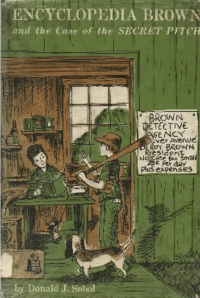
Rereading Encyclopedia Brown and the Case of the Secret Pitch by Donald J. Sobol

(You can listen to this episode here.)

On the second annual Encyclopedia Brown episode, Mary Grace and Deborah match wits with America’s most brilliant boy detective, and with each other, in solving the cases in the series’ second installment, Encyclopedia Brown and the Case of the Secret Pitch.

Mentioned on the podcast:

Goodreads reviews of Encyclopedia Brown and the Case of the Secret Pitch

Other Rereading Our Childhood episodes:

Rereading Encyclopedia Brown, Boy Detective

You can find Deborah’s author interviews on her blog, Books Q&A by Deborah Kalb, and Mary Grace’s adventures in the 1920s on her blog, My Life 100 Years Ago.

This episode was edited by Adam Linder of Bespoken Podcasting.
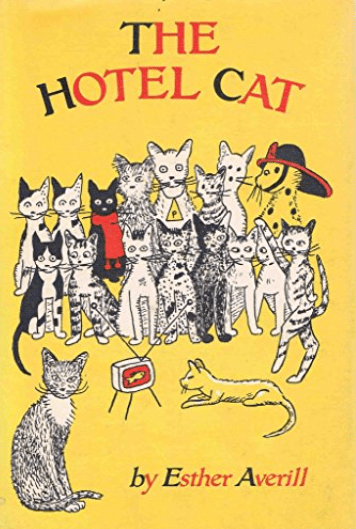
Rereading The Hotel Cat by Esther Averill

(We’ve been publishing episodes regularly but have gotten behind on the website, so we’re playing catch-up. This episode was published on October 3. You can listen to it here,)

On this episode, Deborah (a cat person) rereads, and Mary Grace (not a cat person) reads, The Hotel Cat (1969), a late entry in Esther Averill’s long Cat Club series. You can listen to this episode here.

Other books in the Cat Club series:

The Cat Club (1944)

Jenny Goes to Sea (1957)

The Fire Cat (1960)

Other podcast episodes:

Rereading Harriet the Spy by Louise Fitzhugh

Rereading Ramona the Pest by Beverly Cleary

Rereading Freaky Friday by Mary Rodgers

Rereading Stuart Little by E.B. White

Also mentioned:

The Flophouse podcast, Episode #302 – Cats

Lost Ladies of Lit podcast, transcript of Episode 64, Much Better than CATS — Esther Averill’s Jenny and the Cat Club

Celebrating Children’s Book Week–and a Pioneering Librarian, on Mary Grace’s blog, My Life 100 Years Ago

Dear Genius: The Letters of Ursula Nordstromedited by Leonard Marcus

The Cricket in Times Square by George Selden

Recommended for fans of The Hotel Cat: Stuart Little by E.B. White and Eloise by Kay Thompson (Mary Grace), other books in the Cat Club series (Deborah)

You can find Deborah’s author interviews on her blog, Books Q&A by Deborah Kalb, and Mary Grace’s adventures in the 1920s on her blog, My Life 100 Years Ago.

This episode was edited by Adam Linder of Bespoken Podcasting.
Rereading Black Hearts in Battersea by Joan Aiken

(You can listen to this episode here.)

Mary Grace and Deborah commemorate the 100th anniversary of British author Joan Aiken’s birth by reading Black Hearts in Battersea, the second in her Wolves Chronicles series, featuring resourceful orphans and sinister plots in an alt-history version of nineteenth-century London.

(Note: Mary Grace thought for fifty years that Dido Twite’s first name was pronounced DEE-doh rather than DIE-doh, and she slips back to this pronunciation a few times.)

Mentioned on the episode:

Other books in the Wolves Chronicles series:

The Wolves of Willoughby Chase

Nightbirds on Nantucket

Other books by Joan Aiken:

Jane Fairfax

Other Rereading Our Childhood episodes:

Rereading February’s Road by John Verney

Rereading The Mysterious Disappearance of Leon (I Mean Noel) by Ellen Raskin

Rereading Freaky Friday by Mary Rodgers

Rereading Ramona the Pest by Beverly Cleary

Rereading The Children of Green Knowe by L.M. Boston

Rereading The Owl Service by Alan Garner

Rereading The Book of Three by Lloyd Alexander

Also mentioned:

The Shortest History of England by James Hawes

Post on Black Hearts in Battersea on the blog A Son of the Rock (question King James’s Scottish accent)

“What’s Your 1918 Girl Job? A Quiz,” post on Mary Grace’s blog My Life 100 Years Ago that mentions Jane Fairfax. (Jane Fairfax also comes up on another post, “Jane Austen’s Life 100 Years Ago.”)

“Writing Without Limits: Joan Aiken’s The Wolves of Willoughby Chase Series,” Albion Magazine Online (discusses Aiken taking time to settle on a main character for the series)

The best and worst of April 1918: Magazines, stories, faint praise, and neologisms (Mary Grace’s blog post that mentions Conrad Aiken)

A well-known letter from T.S. Eliot to Conrad Aiken is quoted here.

The Practical Magic of Joan Aiken, the Greatest Children’s Writer You’ve Likely Never Read (The New Yorker)*

Blog on Joan Aiken by her daughter Lizza Aiken

Blog post by Lizza Aiken about Aiken’s partnership with illustrator Pat Marriot

Locus Magazine interview with Aiken in which she discusses The Chronicles of Narnia and the BBC adaptation of Black Hearts in Battersea

Suggested reading for fans of Black Hearts in Battersea: Other books in the series (Deborah), The Book of Three and its sequels (Mary Grace)

The podcast is hosted by Buzzsprout at rereadingourchildhood.buzzsprout.com and is available on SpotifyApple Podcasts, and other platforms.

You can find Deborah’s author interviews on her blog, Books Q&A by Deborah Kalb, and Mary Grace’s adventures in the 1920s on her blog, My Life 100 Years Ago.

This episode was edited by Adam Linder of Bespoken Podcasting.
*Mary Grace took offense at this headline.

Rereading Ramona the Pest by Beverly Cleary

(You can listen to this episode here.)

Deborah and Mary Grace discuss Beverly Cleary’s 1968 classic Ramona the Pest. This was the first book starring Ramona, who appeared in Cleary’s earlier books as Beezus’s annoying little sister before going on to become Cleary’s most beloved character.

Mentioned in this episode:

Other books by Beverly Cleary:

Ellen Tebbits (1951)

Henry Huggins (1950)

Henry and Beezus (1952)

Mitch and Amy (1967)

Dear Mr. Henshaw (1983, winner of the 1984 Newbery Medal)

Other Rereading Our Childhood episodes:

Rereading “B” is for Betsy

Rereading A Wrinkle in Time

Rereading Are You There God? It’s Me, Margaret

Rereading Pippi Longstocking

Rereading Anne of Green Gables

Adaptations of the Ramona books:

Ramona and Beezus, 2010 movie

Ramona, 1988-89 Canadian TV series

Also mentioned:

Mike Mulligan and His Steam Shovel by Virginia Lee Burton (1939)

“Stereotypes in Beverly Cleary’s HENRY HUGGINS” on the blog American Indians in Children’s Literature, February 24, 2023

Beverly Cleary’s New York Times obituary, March 27, 2021

Madeleine L’Engle’s Austin Family series

Deborah Kalb’s The President and Me series

Recommended for Ramona fans: Anne of Green Gables (Mary Grace), The Mouse and the Motorcycle and other books by Cleary (Deborah)

The podcast is hosted by Buzzsprout at rereadingourchildhood.buzzsprout.com and is available on SpotifyApple Podcasts, and other platforms.

You can find Deborah’s author interviews on her blog, Books Q&A by Deborah Kalb, and Mary Grace’s adventures in the 1920s on her blog, My Life 100 Years Ago.

This episode was edited by Adam Linder of Bespoken Podcasting.
Rereading The Book of Three by Lloyd Alexander

(You can listen to this episode here.)

Mary Grace and Deborah discuss The Book of Three (1964), the first book in Lloyd Alexander’s five-book series The Chronicles of Prydain. Loosely based on Welsh mythology, the book chronicles the adventures of Taran, assistant pig-keeper to the oracular pig Hen Wen; Eilonwy, a strong-minded princess; and an entertaining cast of travel companions.

Other books in the series:

The Black Cauldron (1965), a Newbery Honor Book

The Castle of Llyr (1966)

Taran Wanderer (1967)

The High King (1968), winner of the 1969 Newbery Medal

Other books by Lloyd Alexander:

Time Cat (1963). (Deborah discussed Time Cat on a blog post on her favorite children’s books featuring time travel.)

And Let the Credit Go (1955), Alexander’s first novel, based on his experience working in a bank

Janine is French (1960)

The Wizard in the Tree (1974)

Park Avenue Vet (1960)

Fifty Years in the Doghouse (1964)

The King’s Fountain (1971), illustrated by Ezra Jack Keats

Also mentioned on the episode:

A 2012 School Library Journal poll on the best children’s novels, with The Book of Three at #18 and The High King at #68

Sam, Banks, and Moonshine, the Caldecott Medal-winning picture book by Evaline Ness, who illustrated the covers for the original editions of the Prydain Chronicles

Trailer of the Disney movie The Black Cauldron, based on The Book of Three and The Black Cauldron

2010 Slate article on the movie The Black Cauldron

Recommended for fans of The Book of Three:

Deborah: A Wrinkle in Time (discussed on a previous episode), The Phantom Tollbooth (discussed on a previous episode)

Mary Grace: The Owl Service (discussed on a previous episode), The Dark is Rising series

Mary Grace found a fellow The Book of Three fan at The English Bookshop, a wonderful bookstore in Uppsala, Sweden.

The podcast is hosted by Buzzsprout at rereadingourchildhood.buzzsprout.com and is available on Spotify, Apple Podcasts, and other platforms.

You can find Deborah’s author interviews on her blog, Books Q&A by Deborah Kalb, and Mary Grace’s adventures in the 1920s on her blog, My Life 100 Years Ago.

This episode was edited by Adam Linder of Bespoken Podcasting.
Rereading February’s Road by John Verney

(You can listen to this episode here.)

Mary Grace introduces Deborah to John Verney’s 1961 novel February’s Road. It’s the second volume in a series about the large and eccentric Callendar family. In this book, 13-year-old February Callendar unearths skullduggery involving plans to build a road through her family’s property.

Other books by John Verney mentioned on the episode:

Friday’s Tunnel (1959), also narrated by February.

Ismo (1964), told from the point of view of February’s sister Gail. It’s the only book in the series that’s told in the third person.

Seven Sunflower Seeds (1968), narrated by February’s younger sister Berry.

Samson’s Hoard (1973), also narrated by Berry. This book doesn’t seem to have been published in the United States and Mary Grace didn’t read as a child.

Going to the Wars (1955), Verney’s well-regarded memoir about his experiences in World War II.

A Dinner of Herbs (1966), the follow-up to Going to the Wars.

Also mentioned:

Mary Grace mentions The Arm of the Starfish (1965) by Madeleine L’Engle, which, like the Callendar family books, involves young people involved in international intrigue.

Mary Grace and Deborah talk about the word “zany,” used on the covers of our old copies of both February’s Road and (less accurately) Harriet the Spy, which we discussed on a previous episode.

You can check out Verney’s illustrations in an electronic copy of February’s Road on HathiTrust (it’s unclear why, since it’s still under copyright). The link goes to an illustration where February’s father is throwing the mail up in the air in disgust.

A post about February’s Road on the blog Clothes in Books, which includes a comment by Verney’s son Sebastian saying that the character Mike Spillergun’s name was a reference to the comedian Spike Milligan. (This post includes one of Mary Grace’s favorite passages, where February and her frenemy Helen are giving each other the once-over at a party.)

Several commentators have noted the similarity between Verney’s illustrations and those of Edward Ardizzone, a well-known British illustrations. The striking similarity can be seen in a self-portrait by Ardizzone.

Other art of Verney’s, along with a photograph of his family, can be found here.

Mary Grace mentions an obituary in The Independent that says that Verney could have been a significant artist if not for his experiences in World War II.

As Mary Grace mentions, Verney devoted much of his later life to work on historic preservation with the Farnham Trust. There is a post on the Farnham Trust’s website about a centenary lunch in honor of Verney. It includes a photograph of Verney’s wife, children, and grandchildren.

Mary Grace mentions that this is the third episode featuring a British writer who devoted a lot of time to historic preservation. The other episodes were on Alan Garner’s The Owl Serviceand L.M. Boston’s The Children of Green Knowe.

The writer Jojo Moyes said in a 2011 Daily Mail interview that Friday’s Tunnel was the book that first gave her the reading bug.  

Mary Grace says that, after reading the Callendar family books as a child, she went on to be a fan of Margaret Drabble’s early novels. Her favorite was The Millstone, published in 1965.

Deborah mentions Ballet Shoes, the subject of a previous episode, as one of her favorite British books when she was a child.

Mary Grace recalls how much she enjoyed the British words and expressions in Verney’s books as a child and bemoans the practice of adapting British books, including the Harry Potter books, for an American audience. This website provides a list of words and phrases that were changed in the Harry Potter books—“sweets” to “candy,” etc.

Mary Grace mentions the discussion on the episode on Pippi Longstockingon recent edits to that book’s text.

Deborah recommends the Madeleine L’Engle books to fans of February’s Road, since they take place in a similar time period and involve government secrets.She and Mary Grace discussed L’Engle’s classic A Wrinkle in Time on a previous episode.

Mary Grace says that fans of February’s Road may enjoy Nancy Mitford’s novels The Pursuit of Love and Love in a Climate when they are older, since both are about large, eccentric upper-class British families.

The podcast is hosted by Buzzsprout at rereadingourchildhood.buzzsprout.com and is available on SpotifyApple Podcasts, and other podcast platforms.

You can find Deborah’s author interviews on her blog, Books Q&A by Deborah Kalb, and Mary Grace’s adventures in the 1920s on her blog, My Life 100 Years Ago.

This episode was edited by Adam Linder of Bespoken Podcasting.

Rereading The Phantom Tollbooth by Norton Juster

(You can listen to this episode here.)

On this episode, Mary Grace and Deborah discuss The Phantom Tollbooth, Norton Juster’s 1961 classic about Milo, a boy who’s bored with life until a mysterious tollbooth takes him and his electric car to The Lands Beyond, where he meets the warring kings of Dictionopolis and Digitopolis and many other memorable characters. Jules Feiffer’s numerous illustrations are as important a part of the story as the text.

This is the last episode of the season. We’ll be back in May.

Mentioned on this episode:

The Dot and the Line (1963), written and illustrated by Norton Juster

The Odious Ogre (2010) by Norton Juster, illustrated by Jules Feiffer

Harold and the Purple Crayon by Crockett Johnson

The New York Times Book Review podcast’s 2020 interview with Jules Feiffer, where he talks about his friendship and collaboration with Juster

Juster’s 2021 New York Times obituary

2015 Smithsonian Magazine  profile on Juster where he discusses his synesthesia

Recommended for fans of The Phantom Tollbooth:

Half Magic by Edward Eager

The Wizard of Oz by L. Frank Baum and the other Oz books

Alice’s Adventures in Wonderland by Lewis Carroll 

The podcast is hosted by Buzzsprout at rereadingourchildhood.buzzsprout.com and is available on SpotifyApple Podcasts, and other podcast platforms.

You can find Deborah’s author interviews on her blog, Books Q&A by Deborah Kalb, and Mary Grace’s adventures in the 1920s on her blog, My Life 100 Years Ago.

This episode was edited by Adam Linder of Bespoken Podcasting.